

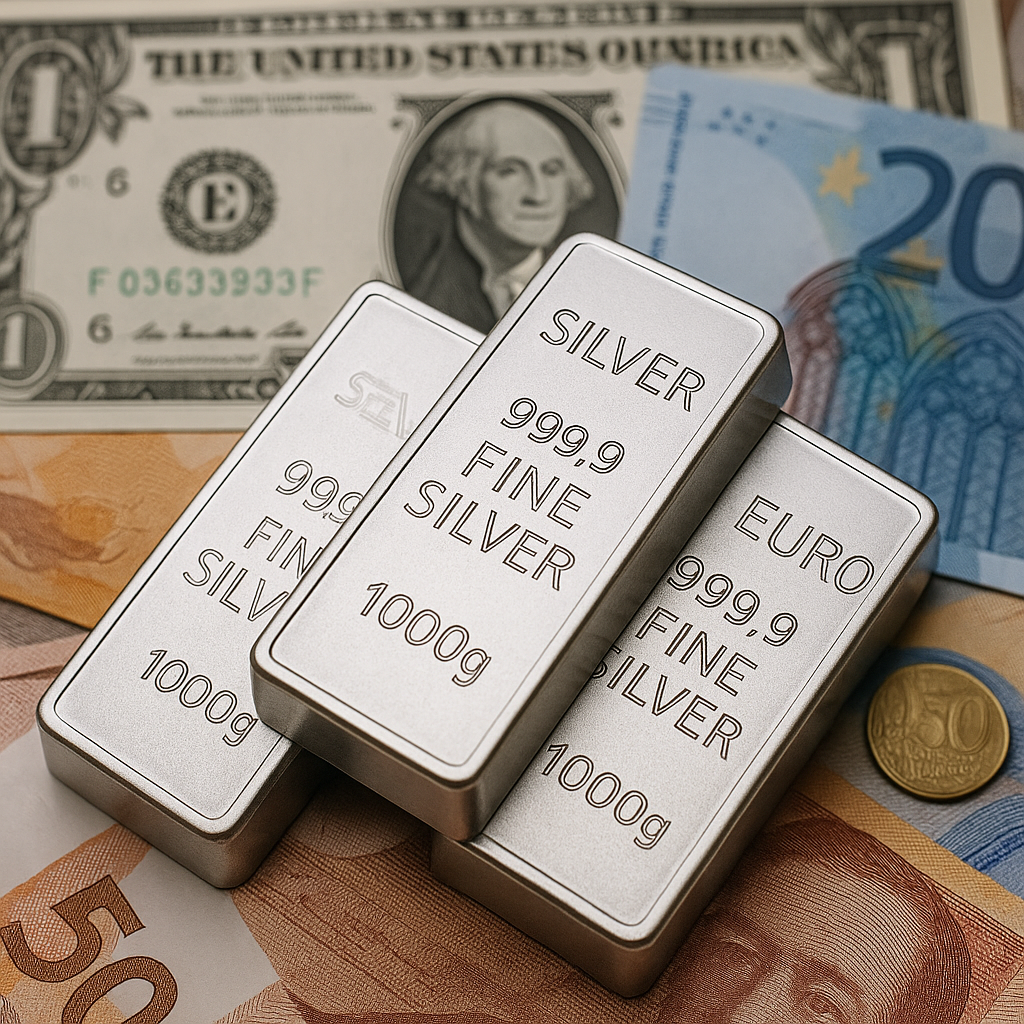
Silver, long overshadowed by its glamorous counterpart, gold, is once again capturing global attention. Over the past year (2025), silver prices have risen sharply amid a combination of industrial demand, supply shortages, and renewed investor appetite for hard assets.
This surge is not merely a speculative cycle; it reflects structural forces in global trade, manufacturing, and currency dynamics that could redefine the metal’s role in the world economy.
Global silver demand continues to outpace supply, leading to a multi-year deficit.
According to the Silver Institute’s 2025 World Silver Survey, the market shortfall is projected at approximately 148.9 million ounces, as mining output fails to keep up with industrial and investment demand.
Industrial Expansion:
The clean-energy revolution, particularly solar photovoltaic production, is consuming record volumes of silver.
Electrification and Technology:
Silver’s unmatched conductivity makes it indispensable in EV components, electronics, and semiconductors.
Investment Demand:
As inflation and geopolitical uncertainty rise, investors are accumulating physical silver bars, coins, and ETFs as a hedge against currency debasement.
Constrained Supply:
Over 70% of global silver is mined as a by-product of gold, zinc, or copper operations, making output less responsive to price increases.
The result is a structurally tighter market where marginal demand translates quickly into price volatility.
Silver’s significance extends beyond industry. In an era of weakening fiat currencies and declining real yields, silver offers a tangible store of value, part industrial commodity, part monetary asset.
Historically, silver has served as both currency and collateral. While no longer a legal tender in most economies, its role as a monetary hedge is re-emerging, particularly in nations experiencing currency depreciation or capital outflows.
Investors seeking refuge from volatile equity and bond markets are turning to precious metals, strengthening silver’s position as a cross-asset inflation hedge.
Countries such as Mexico, Peru, Chile, and China, which dominate global production, benefit from:
Higher export revenues and trade surpluses;
Strengthened foreign exchange reserves; and
Increased fiscal receipts from mining royalties and taxes.
However, governments must balance these gains with environmental and social constraints, as new projects face heightened scrutiny and costs.
Conversely, manufacturing economies; including Japan, South Korea, and Germany experience:
Higher import bills and balance-of-payments pressures;
Potential currency depreciation as foreign exchange reserves are drawn down; and
Inflationary pass-through from rising input costs in electronics and energy systems.
These dynamics may force policymakers to adjust monetary or trade policies to mitigate the impact of silver-driven cost pressures.
Silver’s dual nature makes it both attractive and volatile.
Unlike gold, silver’s industrial dependency ties it to global growth cycles, making it sensitive to both economic booms and slowdowns.
Recent trading patterns show:
Surging physical delivery requests on exchanges;
Premiums widening on coins and bars in retail markets; and
Increased speculative positioning in futures contracts.
This behaviour highlights the blend of industrial demand and safe-haven psychology now driving silver’s ascent.
Analysts caution that sharp corrections are possible if economic growth falters or central banks tighten liquidity conditions.
For policymakers and investors alike, the silver boom carries deeper implications:
Diversification of Reserve Assets:
Although central banks traditionally hold gold, prolonged silver strength may prompt renewed debate about including silver or silver-linked assets in sovereign reserves.
Trade Rebalancing:
Rising silver export values could shift trade surpluses toward producer nations, altering currency exchange patterns in emerging markets.
Industrial Strategy:
Manufacturers may accelerate recycling programs and technological substitutions to reduce silver intensity, especially in photovoltaics and electronics.
Corporate Hedging:
Exporters and industrial consumers must re-evaluate hedging strategies, using forward contracts or options to stabilise costs amid price volatility.
Silver’s rise is symptomatic of a world reassessing the value of tangible assets in an era of monetary uncertainty, geopolitical instability, and green-energy transformation.
For investors, it represents both opportunity and caution: silver can outperform dramatically in inflationary cycles but also correct sharply when risk sentiment reverses.
In international trade, this dynamic underscores the interdependence of commodities and currencies, where shifts in real asset values ripple through trade balances, inflation, and exchange rates.
The global ascent of silver signals more than a commodity rally; it reflects structural realignments in global finance and trade.
From energy transition to monetary hedging, silver now sits at the nexus of industrial necessity and financial resilience.
Whether viewed as a strategic asset, inflation hedge, or industrial metal, silver’s renewed importance will continue to shape currency markets, trade balances, and investment strategies for years to come.
This article is for informational and educational purposes only and does not constitute financial, investment, or trading advice. The information provided is based on public data and general market analysis. Readers should seek independent professional advice before making any investment decisions involving silver, precious metals, or related financial instruments.
We use cookies to give you the best online experience. By agreeing you accept the use of cookies in accordance with our cookie policy.